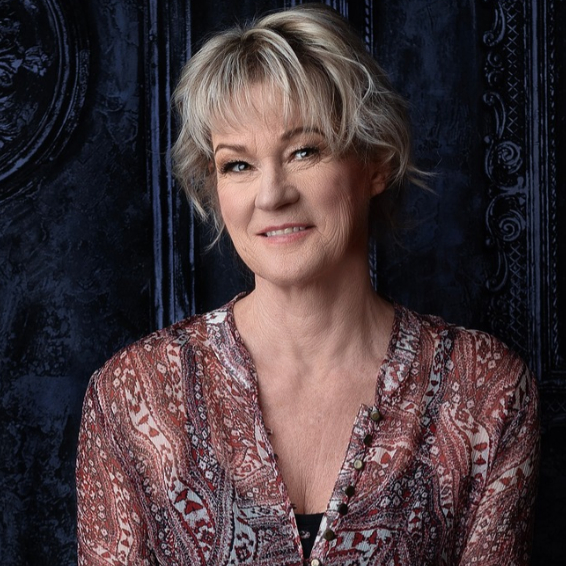
About Michelle Legaré
We are living through a time of profound environmental, cultural, and social disruption—a time of change and uncertainty that challenges many of the beliefs and structures that once gave us a sense of purpose, meaning, stability, and belonging.
Every culture has a story or mythology that helps us make sense of what it means to be human. It asks fundamental questions: Who am I? Why am I here? What is meaningful? What is my purpose? Where do I belong?
These questions feel particularly important today. The dominant story of our time has been one of separation—the belief that we are separate from one another, separate from our deeper selves, and separate from the natural world. Many of the institutions and beliefs we once relied upon to make sense of our lives are being questioned, and the foundations of this old story are shifting.
We are being invited to consider what Thich Nhat Hanh called Interbeing—an understanding of ourselves as fundamentally interconnected and interdependent, inseparable from one another and from the living world around us.
The dominant culture shapes our personal stories, just as our stories are shaped by family patterns, historical circumstances, and behaviours passed from one generation to another. These experiences influence how we understand ourselves and how we relate to family, friends, partners, colleagues, and the wider world. They also shape how we respond to both personal and collective challenges.
From an early age, we develop adaptive strategies to create safety, protection, connection, and a sense of belonging. We may learn to hide how we really feel or exile parts of ourselves that do not seem to fit within our family or cultural environment. We may orient ourselves toward fitting in and, over time, mistake this for a deeper sense of belonging.
Belonging is not about fitting in.
Fitting in can require us to hide, suppress, or exile parts of ourselves in order to be accepted. Belonging, by contrast, is an innate human experience—a felt sense of being at home in our bodies, in our relationships, in our communities, and in the world.
Our adaptive strategies served an important purpose. They helped us navigate the environments in which we grew up and provided ways of creating safety and connection. But what once protected us can eventually limit our capacity for authenticity, love, connection, vitality, and joy.
I believe many of us are experiencing what I think of as soul sickness—a sense of disconnection from ourselves, from others, from meaning, and from our deeper sense of purpose. We may function well on the outside while inwardly feeling lost, disconnected, or uncertain about who we are and what truly matters.
While this experience of disconnection is deeply personal, it is not something we are meant to navigate alone. The paradox of “the solitary journey we cannot do alone,” a theme explored by mythologist Michael Meade and psychotherapist Francis Weller, speaks to the tension between our individual inner work, our fundamental human interdependence, and the collective consciousness of which we are a part.
In the face of the polycrisis we are experiencing, this inner work is not separate from the change we hope to see in the world. It is part of it.
As we become more deeply connected to ourselves, to one another, and to the living world around us, we may begin to imagine—and embody—different ways of being.
A more beautiful world is possible. Perhaps it begins with the stories we tell ourselves, the relationships we nurture, and the freedom to choose how we are destined to be in the world.
How I Come to This Work
These reflections are not separate from my work. They inform how I understand the struggles we experience, the patterns we carry, and the possibilities that emerge when we begin to listen more deeply to ourselves and our stories.
I bring more than 30 years of professional experience supporting people through life's diverse challenges, transitions, and periods of change. I hold a Bachelor of Social Work (BSW) and a Master of Adult and Continuing Education (McEd), and I am a registered social worker in both British Columbia and Saskatchewan. I offer online counselling to individuals in both provinces.
My work is further informed by formal training in Compassionate Inquiry (CI), Internal Family Systems (IFS), and Resilience and Acceptance Community Circle (RACC), alongside ongoing learning and informal study with teachers and mentors whose work continues to shape my journey and deepen my understanding of the human experience.
Thank you,
Michelle
The Holy Longing
by Johann W. Von Goethe, translated by Robert Bly
Tell a wise person, or else keep silent,
because the mass man will mock it right away.
I praise what is truly alive,
what longs to be burned to death.
In the calm water of the love-nights,
where you were begotten, where you have begotten,
a strange feeling comes over you,
when you see the silent candle burning.
Now you are no longer caught in the obsession with darkness,
and a desire for higher love-making sweeps you upward.
Distance does not make you falter.
Now, arriving in magic, flying,
and finally, insane for the light,
you are the butterfly and you are gone.
And so long as you haven't experienced this: to die and so to grow,
you are only a troubled guest on the dark earth.
A Space to Explore, Together
My role is not to solve or fix, but to walk alongside you as we explore what is alive in your life right now. Together, we create space for your experiences to be met with compassion, curiosity, and openness, allowing deeper understanding to emerge naturally.